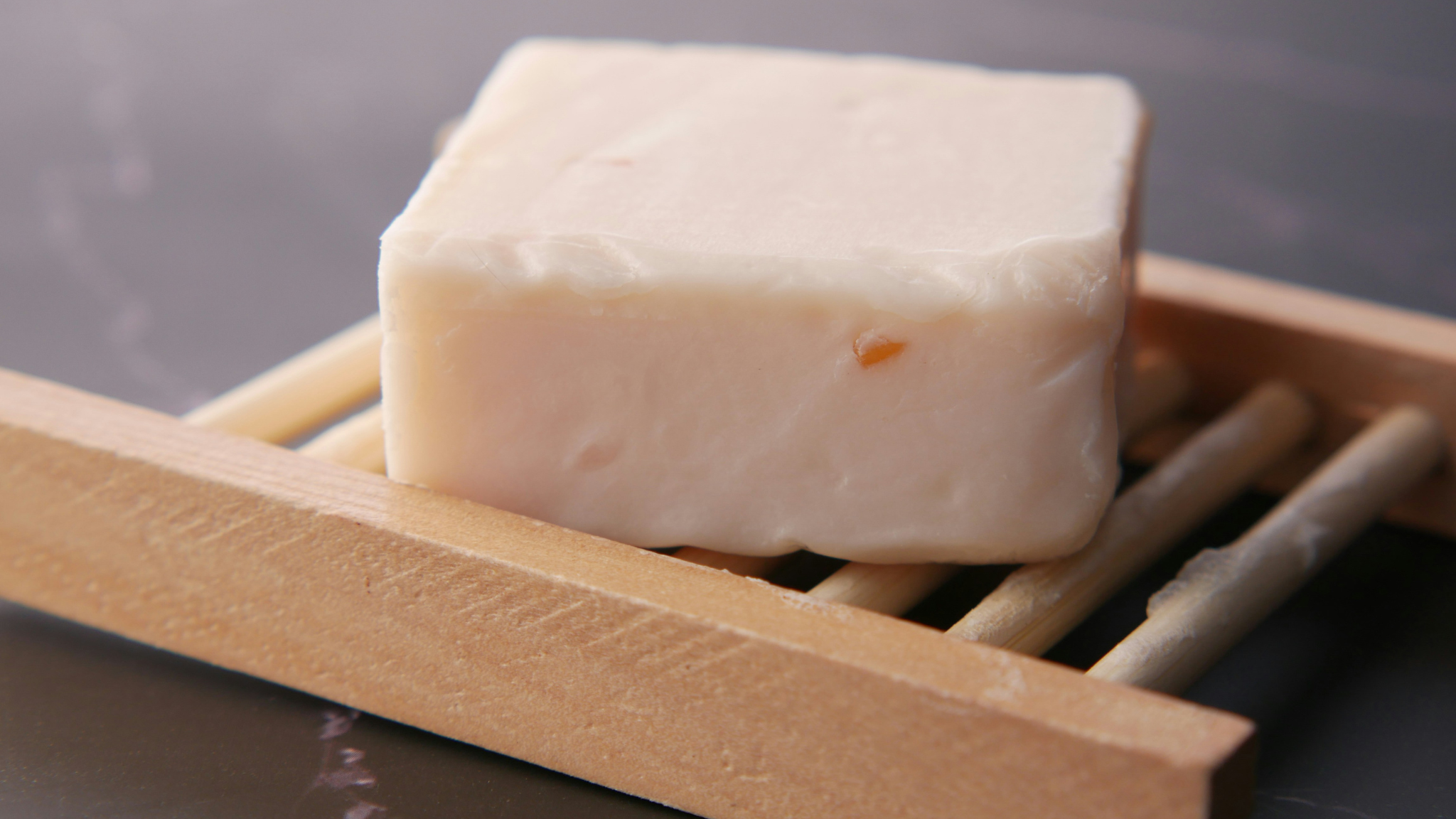
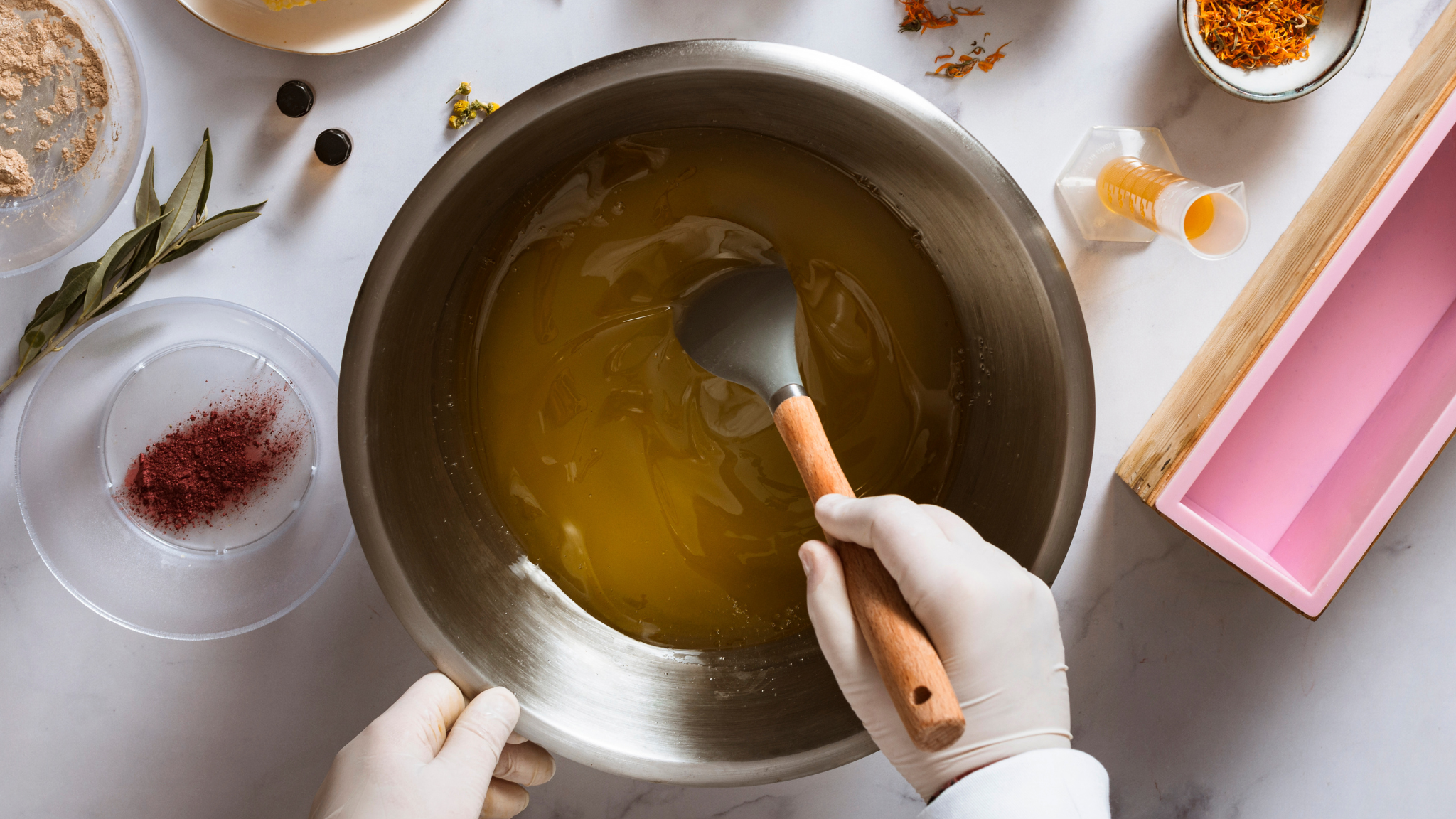
Make a 100% Coconut oil soap
Learn how to make 100% coconut oil soap with a step-by-step cold-process tutorial, superfat calculations, ingredient ratios, and essential safety tips.
Parcourez l'ensemble de nos guides scientifiques et techniques sur la fabrication de savons faits maison.
Learn how to make 100% coconut oil soap with a step-by-step cold-process tutorial, superfat calculations, ingredient ratios, and essential safety tips.
Learn how to formulate your own soaps with a beginner’s guide, a list of 30 useful oils, and a soap calculator for Google Sheets.
Learn why different oils need different amounts of lye in soap making. Discover NaOH SAP values and how to calculate the right amount of lye for your recipe.
Discover the differences between NaOH and KOH in soap making, their uses, SAP values, and the calculation rules for formulating your soaps.
Discover what soap is, how saponification works, and why the choice of oils influences the properties of your handmade soap.
Orange spots on your homemade soaps? Find out why oils go rancid, how to choose the right oils, and how to prevent rancidity.
Learn how NaOH saponification values work, why each oil has a different value, and how to use them to calculate the right amount of lye when making soap.
Learn how to balance a natural soap recipe by understanding the role of each oil, fatty acid, and ingredient. A simple guide for beginners to create well-rounded cold process soap formulas.
Discover three free saponification calculators for creating your soap recipes: SoapCalc, TheSage, and Mendrulandia. Ideal for getting started or deepening your knowledge of formulation.
Discover the role of caustic soda (NaOH) in cold-process soap making: saponification, safety, dosage calculations, and tips for getting started safely.
Choosing oils for cold-process soap making: discover their impact on lather, hardness, and gentleness, as well as suggested usage rates.
How do you calculate the water needed for cold-process soap making? Discover three simple methods: oil percentage, concentration, and water-to-lye ratio.